
Terence Clarke

Home » Uncategorized (Page 7)

Category Archives: Uncategorized

A Year In Port

Filmmaker David Kennard sits back and gestures with genuine expansiveness. “It’s extraordinarily hard not to like the people of Porto.”

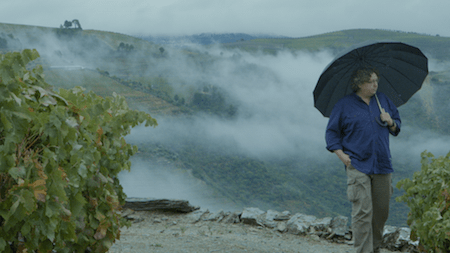
You see what he means when you watch his new film A Year in Port. The final piece in a trio of films Kennard has made (the others are A Year in Burgundy and A Year in Champagne) this one takes us to Porto itself, a northwestern Portuguese city where the major operations of the port wine industry are located, and to the upriver Douro Valley. This is a wild place, through which runs the deep Douro River, of terraced hill- and cliff-side vineyards small and large, placed intricately along the banks of the river, and throughout the rugged hills that rise up from both sides of it. All three of these documentary films display the many difficulties to be found in growing grapes and making wine, no matter what kind. But for me, these Portuguese vines, many of them so old, yet still so remarkably fine, present the most challenging difficulties of them all…simply because of where they are.

2016-07-23-1469232268-44205-port_still_1-1-88-thumb
Photo courtesy of InCA Productions. Use with permission.

A bit of history…Wines have been made in Portugal since at least the 12th century. This film tells of the very long diplomatic liason between the United Kingdom and Portugal. It has lasted unbroken for 600 years and constitutes the oldest such ongoing relationship in the world. The principal beneficiary throughout has been the thriving mercantile trade between the two countries.

The British began importing port more than three hundred years ago, and that business proved so successful that a number of British vintner-merchants established their own manufacturing facilities in Porto. Thus, port wines often are notable for the distinctly un-Portuguese names attached to the companies that make them: Taylor, Cockburn, Symington, Croft, etc. Other European families also became involved, most notably for the purposes of this film, the Niepoorts of Holland, who founded their port business in 1842. Now, a number of the most important companies are still run by families from other countries, the current members of which can be even 7th or 8th generation Portuguese residents with double citizenship, speaking both Portuguese and their own native family languages fluently.

To this day, a good deal of nostalgia-fueled British culture defines many of the Porto operations. In the film we are brought into meetings with members of a few families, in which the history and now the future of the port industry is discussed. We sit down to meals that look like they could have been staged for an ongoing BBC series about aristocratic 19th century England. We even attend a proper cricket match in Porto.

There is significant affectionate humor in these scenes, but nothing obscures the fact that port is serious business to these people and to the country of Portugal, a distinctly international business the nuanced maintenance of which is never far from discussion.

Port is wine that has been augmented during its fermentation with specific quantities of cognac. The addition of the cognac brings an immediate halt to the fermentation, so that the vintner can be certain of the precise level of alcohol that exists and the subsequent integrity of the wine’s flavor. Also, the cognac strengthens the wine, as has been understood since the times when the long voyage by sail to England could damage the vintage and render it undrinkable.

The film takes us through a year’s production of port, and features remarkable specific aspects of this wine’s making.

2016-07-23-1469232429-189458-port_still_1-1-87-thumb
Photo courtesy of InCA Productions. Used with permission.

The very Douro region is a formidable difficulty in its own right, a rugged, even primitive-seeming landscape the farming of which is exceedingly arduous. Almost everything must be done by hand here.

2016-07-23-1469232577-1069718-port_still_1-1-99-thumb
Photo courtesy of InCA Productions. Used with permission.

Then there is the “treading”, which is done by foot. This is the practice of squeezing the juice from the grapes by many people walking on them bare-footed in large stone tanks. The film describes illustrations found on the walls of Pompeii, destroyed by the Mount Vesuvius eruption of AD 79, of groups of workers treading grapes. The production of fine port is one of the very last wine making processes that still requires such a practice. In a distinctive, even heart-possessing, sequence in the film, we see how the same workers who pick the grapes in the Douro vineyards also tread them…mere hours after their having harvested the grapes.

And there is the singular influence of extremely small amounts of well-aged port from ancient vines, some of them more than one hundred years old. These vines dot the Douro hillsides in numerous tiny plots that have been owned by individual families of local farmers, families that in some cases have been here for centuries. The process of adding even just a few drops from one of these old vintages to samples of the new vintage, simply to bring distinction, authority, intensity or complex depth to that new vintage, is shown and discussed in the film by various port winemakers. For anyone who cares about the combination of mind, knowledge, art and basic “feel” that is required to formulate something of pristine quality, this sequence in the film is not to be missed.

2016-07-22-1469231824-6508095-port_still_1-1-922-thumb
Dirk Niepoort. Photo courtesy of InCA Productions. Used with permission.

One last essential feature of port making is described by Dirk Niepoort, until recently the 5th generation head of the Niepoort operations in Portugal. Making quality wine of any sort requires patience…sometimes many decades of patience. Niepoort worries that, in the era in which we live, moving slowly is not considered an option. Instant connectivity, computerization, the cloud…all of it demands immediacy. In an offering of advice toward the end of David Kennard’s stellar film, Niepoort says, “The times now are very fast. What I’m trying to teach my children is, please slow down…and think. Take your time. We have to give port time.”

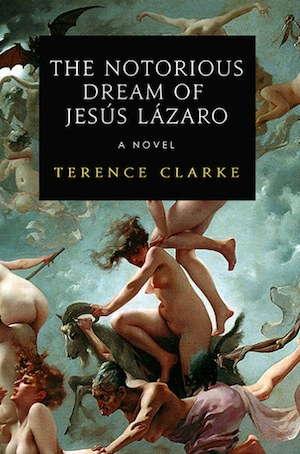
Terence Clarke’s latest novel is The Notorious Dream of Jesús LázaroThis piece first appeared in Huffington Post.

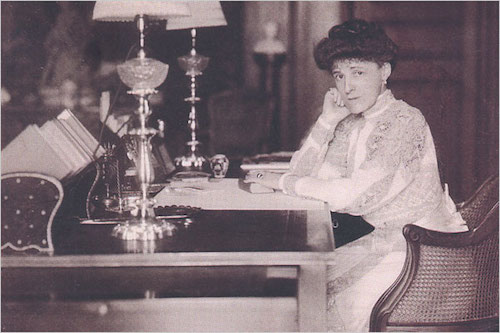
Edith Wharton

edith-wharton-650

I have been a fan of Edith Wharton’s work for a very long time, and I recently had the real pleasure of re-reading The Age of Innocence, The House of Mirth and several of her stories. Not having gotten enough, I read The Custom of the Country for the first time as well as The Reef.

I came to Wharton through her friendship with Henry James, whose work I had idolized as a graduate student. I subscribed then to the silly notion that James was the god and Wharton an accomplished but, in the end, second-rate writer, when compared to the grand stylistic accomplishments of The Master.

I got over it.

It is no disparagement of James’s work to basically prefer Wharton’s. He is The Master, and there is no book on earth quite like The Ambassadors or The Golden Bowl. But I had read both authors before I myself became one, and so I did not understand the difficulties of writing novels or, more particularly, the kinds of social novels that I came to love writing myself.

Both James and Wharton write about wealthy society in the late 19th century United States and western Europe. He once said of his work, “Yes, I have trifled with the exordia,” a word that I believe can be translated as “the beginnings of things”. But James’s work exhaustively plumbs the depths of human emotion through its exemplary–extraordinary–vocabulary and deliciously complex sentence structure. He understands the English language almost as well as Shakespeare did, and his constant contemplation of how to express emotion most intimately is for me one of the grand achievements in English literature. So, when he talks about trifling with the exordia, I believe he is making a joke, because he goes so far beyond mere beginnings.

Edith Wharton is a different kind of writer. She was of course a very close friend of James for many years, and I can only try to imagine what conversation between them was like. Wharton’s writing is far simpler stylistically than James’s, but that notion is not intended to diminish her work at all. She writes a social scene in many ways more completely than he does because she has such an eye for the physical details of dress, setting, furniture, greenery, china, flatware…whatever…that fills the scene, and a gift for description that enables us to see those things with brilliant, revealing clarity. Also she has a splendid comic ear for conversation that often makes such scenes almost painfully funny…or just plain painful (i.e. The House of Mirth).

Despite my avid reading of her work, I haven’t known much about Edith Wharton, except that she was born Edith Jones and was a denizen from birth of highest New York society…so high that her family name is the source of the notion of having “to keep up with the Joneses”. I had read the reviews of R.W.B. Lewis’s Edith Wharton: A Biography when it came out in 1975, and since then have intended to read the book itself, often impatient with myself for being so lazy about such an applauded work. How could I care so much for what Mrs. Wharton had done, while knowing hardly anything about her?

I just finished the book.

Lewis is himself a very fine writer. Whether describing a motor trip with James through some part of Europe or a dinner party with Bernard Berenson or Andre Gide or Marcel Proust at her apartment at 58 rue de Varenne in Paris, or an exchange of letters between herself and a lover (William Morton Fullerton) or a dear friend (Walter Berry), Lewis is unerring in the gracefulness of his prose, with a clear understanding of Mrs. Wharton’s heart and mind. Also, he will give occasional descriptive sketches of what she is writing at the moment that caused me to keep a list of stories or novels by Mrs. Wharton that I have not read. That list comprises about a dozen books, and my plan is to read them all…soon. Also, Lewis’s writing does not suffer from the barren academic pointlessness that burdens so much contemporary criticism. He’s clear, funny, erudite and thoughtful. If, in a moment of foolish error, you bump into examples of how academics write these days, you’ll realize what a great gift Lewis has offered us.

For a full and perceptive view of the life of the wonderful Edith Wharton, this book is where you should start.

This piece first appeared in Huffington Post.

Basic Training

IMG_0022 copy

There is a difference between education and training.

Education is an exploration of the soul—aided by deep study in the arts, creativity and the hard sciences—that opens the door to what it means to be human. It is the search for beauty and the understanding of it, or for the perfecting of newly artful inventions that deepen the possibilities for emotional depth and the advance of civilization.

Training is what you get when you want to perform a pedestrian task.


Peter Thiel has been very well trained. The co-founder—with Elon Musk and some others—of PayPal, and a member of the Facebook board, he was recently named by Donald Trump as a delegate to the upcoming Republican Party convention. According to Forbes magazine, Thiel is worth $2.7 billion, and in some circles he is world famous. He also feels that a university education is of little use in our times. He has been quoted as saying. “A diploma is a dunce hat in disguise.”


This despite the fact that his alma mater Stanford, along with several other institutions—Berkeley, University of Chicago, Harvard, Yale, NYU ad. infinitum.—continue fueling the enormous breakthroughs in the advance of the arts and sciences that have always been emblematic of the American university system. His attitude toward higher education is for me even ironic, given that, among his other degrees, he holds a bachelor’s from Stanford in philosophy.

A recent article by Tom Clynes in the New York Times tells of The Thiel Fellowship, founded in 2010, “which each year would offer 20 ‘uniquely talented’ teenagers $100,000 to forgo college and pursue ‘radical innovation that will benefit society.’ Today’s future Zuckerbergs shouldn’t be wasting time in lecture halls and football stadiums; they should be building businesses.”


The trouble with this is that it implies that the founding of businesses is some sort of end-all, and that, ipso facto, business is the reason for existence. But for that existence to be a successful one, the business endeavor needs to be accompanied by sophisticated and soulful—which is to say, actual—education, so that the businesses that are founded be relevant to the maintenance of civilizations and good for the business founder’s own soul…and those of his employees, of course. These Thiel fellowships throw the baby out with the bath water because of the totality of their rejection of actual education.


There are difficulties in the education system, to be sure. One reason for Thiel’s low opinion of the college degree may derive from the almost constant attacks on funding of public education by conservative and/or libertarian elements in state and federal governments. This too is an irony, given Thiel’s own libertarian leanings. He complains about what his cohorts cause. Also, it used to be that universities were centers for real learning, and therefore were devoted almost exclusively to studies of the liberal arts. Literature. Music. The graphic and plastic arts. Philosophy. History. But subjects that once trained people to perform tasks have now ascended to prime importance in most universities. So…engineering, business, technology.


Influenced by this change, the purpose of actual education is being degraded to some degree by the current rush among universities to improve the bottom-line. But real education has never been a slave to profit and loss. Rather it lives in the soul, where such notions as creativity and emotional intelligence reign. Experiment. Discovery. Understanding.


It is true that, in the arts, a certain dimming of the intellect is taking place in some institutions. In my own field, the study of literature has been badly eroded by the theories of deconstruction posited by people like Jacques Derrida and Paul De Man. It’s impossible to say whether these theories have any value, because the language with which they are explained is so filled with academic jargon, tortured syntax and gibberish thinking. Luckily, we always will have William Shakespeare, Charles Dickens, Jane Austen, Octavio Paz, Gabriel García Márquez and the countless others, who keep the ship so admirably afloat and, with their excellence, simply thumb their noses at the deconstructivist nonsense.


Thiel has been quoted as saying that “the core problem in our society is political correctness.” This is very far from so. Other problems are much more important. The almost universal political silence about the need for world-wide availability of—and training in—birth control procedures, which would alleviate, if not solve, the problems of over-population and world hunger. Political indifference to the clear-eyed science that has proven the dangers of human-caused global warming. The religious intolerance that is resulting in so many ghastly wars. The renewal of ethnic hatred, bringing about, among other things, threats to build actual walls against people different from one’s own. As core problems go, “political correctness” hardly competes with these.


To solve such real problems, we need a much larger commitment to education, rather than an abandoned one…public education in particular, supported much more fully by public funds than is now the case, so that those unable to attend private schools can still obtain a quality education…and excel.


The world will not be saved by engineers writing code. Rather, a well-educated public, conversant in the arts and hard sciences, the nature of soulful creativity and emotional intelligence, the history of civilizations, their literature and arts, will alleviate the difficulties we face and maybe even solve them.


Here, to be fair, is where training will come in handy. We’ll make good use of those handy tools like computers, the cloud and the internet, which in their usefulness take a prominent space in the same workbox, say, as the pencil.


Training results in workable solutions that get you through the day. It makes things more convenient…and otherwise is of little profound importance. There is almost no emotional intelligence in it, an element that, if you’re paying attention in school, a full education in the liberal arts and hard sciences provides in abundance.


Terence Clarke’s story collection, New York, will be published later this year. This piece first appeared in Huffington Post.
On Tango: El Tanguero Obama

160323_pol_obama_tango_16x9_992

ABC News

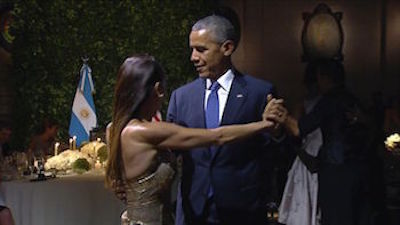
 President Obama’s essay of Argentine tango was a diplomatic triumph.

Those of us who devote a lot of time and effort to that remarkable music and dance form know from the very beginning how difficult it is. You don’t just start up and dance tango. The very first lesson is the worst because, as Nora Olivera, the superb maestra with whom I’ve been studying since my first very tentative efforts, told me after our initial lesson, “The trouble, poeta, is that you don’t know how to walk.” I protested, since I thought I had been walking more or less successfully since I was eighteen months old, and by the time of my first tango lesson, I was quite a bit older than that. She clarified her criticism: “I mean, you don’t walk in the way of tango.”

I spent the next year or two trying to learn it, with exhaustive coaching from Nora and slavish practice up and down my hallway at home…all to glorious music. It was one of the most difficult physical tests I’ve ever faced.

Eventually, I got it.

KevinFooterBeaTerryPhoto

Terence Clarke and Beatrice Bowles. Photo by Kevin Carrel Footer.

But nothing in tango is easy. Once, during a lesson I was having with the great Carlos Gavito, I bemoaned the fact that I felt I woud never really get tango, that my northern upbringing, my un-Mediterranean, un-bonairense (i.e. Buenos Aires) heart made it impossible for me. Gavito waved my protestations away. “Terry, if I have one good tango during the milonga…one!…I consider the evening a success. Because that’s usually all I get.”

is

Carlos Gavito and Marcela Duran. Photo courtesy of Carlos Gavito.

Carlos Gavito, of all people, said that to me.

So…President Obama. This man has real grace, and it showed in his performance that evening, despite the fact that, yes, he was unsure of himself on the dance floor and, yes, he was worried that he may be shown up. But he was not worried enough to miss all the nuances of the music and the delicacies of the tango walk, as I was the first time I tried it. He’s got the thing in his heart. His tango soulfulness is clear. You can see it simply in the way he holds himself. Grace. Self-knowledge. Verve. Confidence.

The phenomenon of Obama’s tango is very important for the relationship between the United States and South America. In Argentina, unlike in the United States, dancing well is considered the mark of an accomplished man. If you can do that, it means you’ve got a fine sense of yourself, you’re willing to enter freely into the difficulties of one of the great dance forms in the world, and you are not afraid. You respect the music. You understand the emotional depth of the dance. You move as though tango will reveal to you the secret to understanding, the sharing of knowledge with your partner, the give and take of moving together, suggestion, negotiation, the idea presented, the discussion of that idea…all undertaken with a great heart.

These are the kinds of things that nations must learn in order for the world to move ahead with thoughtful fellow feeling and authority, for the benefit of all. Tango can do that for you. But I don’t know of anyone in the current crop of Republicans who would understand this. Surely not Donald Trump. And Mitch McConnell? Please!

After the president’s success on the dance floor, he was criticized by several on The Right for being so devil-may-care in the wake of the Brussels (and other) attacks. “I think he ought to return home,” John Kasich immediately opined. Nicolle Wallace, George W. Bush’s former director of communications, suggested that Obama’s tango was a “communications crime…that puts him vastly out of step with the entire American public.” (No pun intended, I hope.) Stuart Varney, host of Fox Business, was upset by “another jarring image of President Obama dancing the night away while Europe mourns its dead. Good morning, everyone. This is not going to go down well.” Fox’s Andrew Napolitano worried about it too. “I’m not so sure he should be doing that when everybody else is worried about where ISIS is, who they’re going to kill next, and are they going to come over here.”

I suspect that Obama does worry about ISIS, quite a bit. And if I’m not mistaken, he was at the time on an important diplomatic trip to Argentina, a close ally of the U.S. and a nation central to South America’s continuing rise to true world prominence. His tango was a very positive nod to that country’s deep artistic and historical importance to the western hemisphere. More to the point, though, I think these right-leaning spokespeople would do better to recall the Republican party’s wholesale stampede to launch the invasion of Iraq in 2003. Their enthusiasm for that event was total, and thus a major reason for why the Middle East is so embroiled in its current problems. They didn’t seem to fret all that much while Iraq was mourning its many, many thousands of civilian dead.

Of the two diplomatic efforts, Obama’s tango was clearly the more successful.

Terence Clarke’s latest novel  The Notorious Dream of Jesús Lázaro was published last year. His new story collection New York will come out this fall. This piece appeared originally in Huffington Post.

Waiting

is

One of the most valuable tools in writing a fine novel is the ability to wait. If you cannot envision the details of the scene you wish to do…if the exchange of dialogue that you have in mind is struck dumb…if the sensuality you’re wishing for in the description of the lovers’ underwear flying through the bedroom….if the words just won’t come, you should not try to force them onto the page. To attempt to do so (as I often did in my earliest work) makes the result clunky and unworkable…the essence of amateur hour.

So now…I wait.

Waiting does require patience and a signal kind of bravery. Novelists are intense people, and they want words to appear. See Hemingway’s famous requirement of 500 words a day. Jack London’s equally famous 1,000 words a day. The irony is that most people who wish to write a novel set out on an endeavor for which there may not be a viable end. Indeed, most don’t get there. But these writers are not to be blamed for that. The emotional and intellectual involvement required to successfully complete a novel well, can drain the writer of every soulful impulse. The words don’t work. The story falters. This or that character makes no sense. Everyone who attempts a novel has encountered such profound difficulties.

When it happens to me, I find that doing nothing is the best thing to do. Forcing the words worsens them. But it takes real fearlessness to do nothing in these cases, because you worry that nothing will result in nothing. You have to keep writing, you tell yourself. You have to proceed. You’ve got to get it out.

But doing nothing in those moments usually results in a better novel.

I learned about this when I was writing a novel titled My Father In The Night, which tells of an elderly Irishman, MJ Pearse, who in the 1950s is living in San Francisco. During the Irish civil war against the British after World War I, he was directly involved in the murder of an Irish policeman, and has continued his life in the United States terrified by the memory of what he did, and telling no one about it. His son Joe, born in the U.S., is an immigration lawyer who is involved in raising money in support of the Irish Republican Army in Northern Ireland. The two men argue with each other about I.R.A. politics, to such a degree that Joe’s son Pearse, just twelve tears old, attempts to intervene in the discussion, to bring the two men into some kind of acquiescent agreement with each other.

When I finished the manuscript, my publisher Alev Lytle Croutier, herself a superb writer, accepted it tentatively, and hired editor Alan Rinzler to help me shape it into true publishable form. The manuscript contained about 450 pages. A few weeks after he had received the manuscript, Alan sent me a very long letter, single-spaced, in which he had several dozen suggestions for changing things throughout the novel. All these suggestions dealt with individual words, phrases, sentences and paragraphs.

It was an exhaustive edit, and completely expert.

But there was one suggestion that was simply–literally–breathtaking to me, and it came at the very end of Alan’s letter. He suggested that I excise in its entirety a section in the middle of the manuscript that was 142 pages long. It took the novel off on a vector that did not jibe with everything else, he said. It interrupted the natural flow of the conflict between these three characters, and kept the reader from arriving at the emotional satisfaction of having that conflict resolved. Alan was insistent. This passage was extraneous, served little purpose for the novel as a whole, and resulted in an interruption that only took the novel off course.

I sat at my desk reading this paragraph, and rage enveloped me. I tossed the letter aside. I considered calling Alan and loudly berating him. Who was he to tell me what to do…so apocalyptically?

After a few palliative glasses of wine, I went to bed, still fuming. I lay awake most of the night, composing my rebuttal. When I awoke, however, I got the manuscript up on the computer screen and read the offending 142 pages. To my amazement, I discovered that Alan was right and, in a gesture that took me but a single moment, I did indeed excise those 142 pages. They had taken me nine months to write, and the novel was much better for my having gotten rid of them.

I knew why. I had struggled with that entire passage, which was indeed extraneous and off the path. But I had insisted that I get out my 500 words a day, and that had become more important to me than telling the story well. An arbitrary number in my head took over from any sense of graceful story telling, soulful language and truth telling. The plot of that section didn’t work. The language was second-rate. It simply did not read well.

I now realize that I should have done nothing. I should have waited for the story…the real story…to come to me. That practice has served me very well ever since.

The ultimate wait comes when you sense that you have written all you can write. French poet Paul Valery famously wrote, “Poems are not finished, only abandoned.” This is even more the case with novels, since they are usually so much longer than poems. An author’s “abandonment” of his or her novel, if the novel is any good, is like abandoning a planet. You have to be brave to do it.

This piece appeared originally in Huffington Post.

A Notorious Dream

Cover_Notorious Dream Cover

As a devoted fallen-away Roman Catholic, my writing a novel about a Catholic archbishop and his deep questioning of his own beliefs was a difficult and, personally, very contentious process. My own long experience of The Church had led me to the conclusion that it is a self-serving bureaucracy intent above all upon maintaining control of its flock. Its nostrums about peace, faith, doing good and all that remain mere nostrums in light of its destructive polices toward birth control and population growth and the directly related consequences of world starvation, global warming, and more or less continuous war. Also, The Church’s attitudes toward any scientific investigation that clashes with Church-imposed beliefs, its miring in disproven medieval visions of the nature of the universe, its obdurate disrespect for women’s rights and those ancillary policies relating to women’s second-class status in the Church hierarchy, their no-class status at the highest level of that hierarchy…the list does go on. The very term “flock” should cause laughter among those who belong to the Catholic faith since it implies a herd of thoughtless animals doing everything that its shepherd demands. Sheep do not ask whether the shepherd’s ideas have worth. The priest bureaucracy well understands this, and has so for two millennia. It does everything it can–especially when it invokes the ultimate fallback, the Word of God–to maintain that control.

In his dealings with the flock, no priest is subject to any democratic ideal.

6a00d8341c86d053ef014e5f9d2b3a970c-500wi

One of the main characters of The Notorious Dream of Jesús Lázaro is the archbishop of San Francisco Ruben Mullins. He is faced at the beginning of the novel with an offer from Jesús Lázaro, a mystic Mexican muralist with a grand ability for apocalyptic art, to paint giant murals on the entire façade of the Cathedral of Saint Mary in San Francisco, California. (It happens that, although the book is a fiction, the cathedral actually exists, at the corner of Gough and Geary Streets.) An archconservative prelate, Ruben thinks this is a lousy idea, refuses to have anything to do with it, and therein lies the tale. The irony is that although, when I began writing, I conceived of Ruben as the villain of the piece, once I got into it, his emotions changed, also apocalyptically. His handling of Jesús’s request becomes something quite different from the stern apostolic refusal that I had thought it would be when I began writing the novel.

Despite protests in the street, the disapproval of the Vatican, a disastrous love triangle that threatens everything, and even possibly the wrath of God, the murals get painted.

To my surprise, Ruben is now the hero of the finished novel. He undergoes a transformation of faith that allows him to see the ascendancy of the spirit and creativity over the deadened dictates of the Church bureaucracy. His change in attitude is extremely painful for him because it flies in the face of everything he has believed since his very early childhood. But he realizes that what he has believed came to him through unquestioning rote acceptance of the tenets of his faith. He also sees that these tenets are used for the furtherance of the careers of the Church bureaucracy, and are irrelevant to artistic endeavor and emotional discovery.

A publisher friend of mine recently told me, “Terry, you didn’t write about a parish church. You wrote about a great cathedral. You didn’t write about a simple priest. You wrote about an archbishop. And Jesús Lázaro doesn’t dabble in the arts. He’s one of the greatest painters of the 21st century.” She smiled, tapping my chest with an index finger. “Have you no modesty?” That the novel attempts from time to time to address some of the biggest political issues that face us now is for me a by-product. In the end it is about the human creative spirit and how it always finds ways to prevail. The novel is also, I should add, very humorous. That I was able to write it astonishes me.

This piece appeared originally in Huffington Post.

Alexander von Humboldt, On Everything

Andrea Wulf begins her astonishing new book The Invention of Nature: Alexander Von Humboldt’s New World, with this:

They were crawling on hands and knees along a high narrow ridge that was in places only two inches wide. The path, if you could call it that, was layered with sand and loose stones that shifted whenever touched. Down to the left was a steep cliff encrusted with ice that glinted when the sun broke through the thick clouds. The view to the right, with a 1,000 foot drop, wasn’t much better. Here the dark, almost perpendicular walls were covered with rocks that protruded like knife blades.

Alexander von Humboldt and his three companions moved in single file, slowly inching forward.

Humboldt-Bonpland_Chimborazo

Humboldt and Bonpland at Chimborazo, Friedrich Georg Weitsch, 1810

This took place on June 23, 1802, when Humboldt and his friends were climbing Chimborazo, a 21,000 foot-high volcano in the Ecuadorean Andes. It was one of innumerable such occasions of derring-do that marked Humboldt’s life. But he was by no means simply a reckless explorer. Alexander von Humboldt was one of the greatest scientists of his time, a world-renowned figure for his many scientific discoveries, a revolutionary in his philosophical endeavors, a superb and extremely prolific writer and a friend and mentor to many other greats, not the least of whom were Johann Wolfgang von Goethe, Thomas Jefferson, Simón Bolívar and Charles Darwin. When the king of Prussia, Frederick William III, introduced Humboldt to the Emperor Franz Joseph of Austria, he suggested that Humboldt was “the greatest man since the deluge.”

Alexandre_humboldt

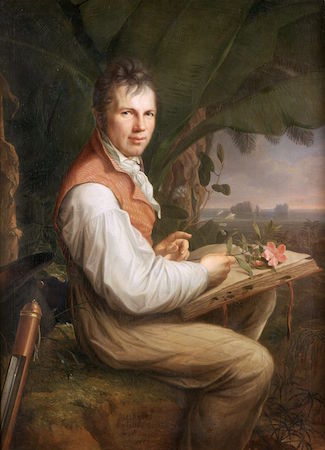
Alexander von Humboldt, Friedrich Georg Weitsch, 1806

Reading this book, you will find out–in sumptuous, finely written detail–why Humboldt was so highly regarded by these and many, many other contemporaries. Even as a child in Prussia, he was an accomplished botanist, and the plant samples he later brought back from his many travels through far-flung territories in the old and new worlds formed the basis of contemporary botanical science. A noted geographer, he provided maps and geographic information about many areas of the world for which little or no such knowledge existed before him. He was a famous geologist as well as a discoverer and describer of bird and animal life everywhere he went. Humboldt discovered the magnetic equator, which is defined as “an imaginary line around the earth near the equator, where the lines of force of the earth’s magnetic field are parallel with the surface of the earth and where a magnetic needle will consequently not dip.” No one had understood this before him. He presaged what was to become an understanding of plate tectonics, and therefore of the makeup of the surface of the entire planet. Toward the end of his life, he made a close study of…well, everything, and wrote about it in his grand opus Kosmos.

Humboldt believed that the world is a single entity in which every element is as important as all others in the preservation of its own health. This was a revelation when he first proposed it, during a time when monarchies ruled, the earth was deemed inexhaustible, and Man supposed himself to be the ruler (and plunderer) of all he surveyed.

Because of the existential dangers present in the state of contemporary global weather and the destruction of the atmosphere, Humboldt’s views continue to be directly instructive to this day. His dozens of books describing his travels, his findings and his ideas remain today central to the history of science and to the basis for our understanding of the dangers of global warming (which he first observed accurately in the early 19th century.) Tangentially, the way he wrote about the interconnectedness of all nature was central to the development of the Romantic movement in western European literature, art and music.

My favorite chapters in this book are those dealing with Humboldt’s explorations of South and Central America between 1799 and 1804. He had made the acquaintance of a French botanist named Aimé Bonpland, and during those years the two men explored the great Orinoco River in Venezuela, Chimborazo and many other volcanoes, the Andes range, the vastness of Mexico, Cuba’s island offerings and those of many other territories. The scientific data and observations that Humboldt and Bonpland brought back were among the most accurate and compendious ever gathered.

Humboldt_and_Bonplant_in_the_Jungle

Humboldt and Bonpland, Eduard Ender, 1856

Humboldt met and was befriended by Thomas Jefferson. Jefferson himself had a much noted interest in botany, geography, agriculture and scientific instrumentation, and Humboldt’s findings in the new world were of great personal interest to him. Humboldt believed that scientific knowledge was above politics and should be shared by all for the benefit of all. His conversations and correspondence with Jefferson, nonetheless, allowed the president to obtain an accurate understanding of Mexican politics and territory that was later to aid (for good or ill) the United States’s annexation of Mexican territory after the war of 1846-47. Generous in his sharing of so much information with Jefferson, Humboldt in large part gave the Americans the knowledge of what they eventually would obtain.

Politically, Humboldt was a deeply thoughtful, liberal-minded philosopher who advocated for representative democracy, the rights of indigenous people everywhere in the world and the notion that nature should be protected by liberal-democratic governments. The world, he would emphasize, is a finite, elegantly balanced place whose natural gifts must not be plundered. So Humboldt’s explanations of the dependence of the world’s matter, plants, animals and human beings on each other–explanations so vast and clear-minded–are more pertinent in our own time than ever before. Given the current state of perilous indifference to the ruination of the planet on the part of so many governments, Humboldt’s work should be required reading for every politician.

Andrea Wulf’s book is a paragon of research, thoughtfulness, considerable humor and fine writing. Her accomplishment in explaining this remarkable man to us is to be congratulated.

Terence Clarke’s latest novel The Notorious Dream of Jesús Lázaro was published last year. His story collection New York will be published this fall. He is director of publishing at Astor & Lenox. This piece appeared originally in Huffington Post.

How To Write Fiction

vtls000168711

Ireland has ever been a fount of short fiction. So many Irish writers have distinguished themselves in this form that their names make up a kind of who’s-who of writing sophistication and genius: John McGahern, Frank O’Connor, Edna O’Brien, Maeve Binchy, Colm Tóibín, William Trevor, Roddy Doyle, Seán Ó Faoláin, Julia Ó Faoláin, Eoin McNamee and many, many more.

James Joyce, of course, holds a kind of sway over all Irish literature written in English, mostly because of Ulysses. Whether the novel deserves that sway remains open to debate. What some readers consider a work of great genius is held by others to be one of profound linguistic nuttiness. It is revered particularly by professors. The conversation about that will go on for as long as literature exists, so there must be something indeed to Ulysses.

I’ve read it. But for me Joyce’s best book is Dubliners. It was controversial well before it was published, at least as far as Joyce and a number of publishers were concerned. The publishers were squeamish about producing the book because of its for-the-time racy scenes. Women’s underwear is described with lovely clarity. Women themselves are shown to have sexual longings. Profound sensuous desire is actually described. Homosexuality rears its head. Anti-Catholic opinions are voiced by some of the characters (and even, subtly, by the narrator himself.) The English occasionally are spoken of by the Irish characters with the ironic chagrin that comes of having been subjugated by a colonialist power for centuries.

It took Joyce years from the completion of the manuscript, and submission to fifteen publishers — a couple of them more than once — for the book finally to come out. The first publishing company, Grant Richards of London, accepted it right away in 1905, but then refused to publish the book if Joyce would not agree to certain changes. They wanted its morals sanitized. The same happened with another company, Maunsel & Roberts of Dublin, some years later. Joyce told Maunsel & Roberts that he would pay for the printing if he could obtain the so-far completed press sheets from them, and their response was to burn the press sheets. Joyce, thinking ahead, had kept a copy of the proofs, and was able to pass them on to the original company Grant Richards, who decided finally to risk publishing the salacious book in 1914. Joyce was thirty-two years old.

Each story in this book is a treasure in which the emotional difficulties of the characters are observed and written about with subtle kindness and well-considered sympathy. A young boy looks for a gift for a neighbor girl with whom he has fallen in love. An old priest dies. A maiden who has decided to immigrate with her betrothed to “Buenos Ayres” decides instead that she cannot leave her ailing, cantankerous father. A group of men seated at a fireplace mourn the death and consider the life of the great Irish nationalist Charles Stewart Parnell.

The stories are for me must-reads, and I do read them, once a year.

In the final story, “The Dead”, Gabriel Conroy, who is a kind of spokesman for his family, attends an annual celebration on Christmas Eve, hosted by the Misses Morkan, two elderly sisters. The guests form a kind of mini-representation of middle-class Dublin society at the turn of the 20th century, with all their affections, difficulties and embarrassments. After the party, Gabriel learns from his wife Gretta that she was once in love with a boy named Michael Furey, who died from illness that was contracted while he was waiting, outside Gretta’s house in a fierce rainstorm, for some indication that she loved him. She has never forgiven herself for leaving poor Michael, whom she cared for profoundly, standing in the rain.

My favorite passage in English prose writing is made up of the last two paragraphs of “The Dead”. Here they are.

Generous tears filled Gabriel’s eyes. He had never felt like that himself towards any woman, but he knew that such a feeling must be love. The tears gathered more thickly in his eyes and in the partial darkness he imagined he saw the form of a young man standing under a dripping tree. Other forms were near. His soul had approached that region where dwell the vast hosts of the dead. He was conscious of, but could not apprehend, their wayward and flickering existence. His own identity was fading out into a grey impalpable world: the solid world itself, which these dead had one time reared and lived in, was dissolving and dwindling.

A few light taps upon the pane made him turn to the window. It had begun to snow again. He watched sleepily the flakes, silver and dark, falling obliquely against the lamplight. The time had come for him to set out on his journey westward. Yes, the newspapers were right: snow was general all over Ireland. It was falling on every part of the dark central plain, on the treeless hills, falling softly upon the Bog of Allen and, farther westward, softly falling into the dark mutinous Shannon waves. It was falling, too, upon every part of the lonely churchyard on the hill where Michael Furey lay buried. It lay thickly drifted on the crooked crosses and headstones, on the spears of the little gate, on the barren thorns. His soul swooned slowly as he heard the snow falling faintly through the universe and faintly falling, like the descent of their last end, upon all the living and the dead.

If you want a primer on how to write fiction, please read Dubliners.

Terence Clarke’s New York stories are available as E-singles. They will be published as a book in 2016. His novel The Notorious Dream of Jesús Lázaro was published this year. This piece first appeared in Huffington Post.


The Novel?

isIn the September 24, 2015 issue of the New York Review of Books, Jed Perl writes about the current state of an art form that has been declared dead or dying many times. That would be painting.

He quotes painter David Salle: “The web’s frenetic sprawl is opposite to the type of focus required to make a painting.” The seemingly overwhelming influences of contemporary technology, branding and advertising, streaming devices, electronic games, the cloud and so on represent a collective threat to the time-honored traditions and deep emotional expression of oil painting.

Perl agrees that the threat exists, yet his opening line is, “Like the reports of the end of history that we have been hearing, the many reports of the death of painting have no basis in reality.” He then follows with a convincing and very refreshing description of the fine high health of painting in these times, despite how it may appear at first glance. “For this very reason painting becomes a steadying force–a source for stability in an art world were everything can seem to be up for grabs.”

Like the worry that painting is in assisted living, a similar knell has been ringing in recognition of the loss of the novel.

The six major publishing conglomerates in the world seem so inflamed by sales goals that fiction is accepted by them, more or less entirely, only when it fits certain cubbyholes in which, it turns out, seriously poor writing is thriving. The holes are labeled with unfortunate names: chick-lit, dystopian, paranormal, Christian, the end-time, the rapture and so on. So we’re treated every day with the violent demise of the entire world. Terrifying extraterrestrial robots destroy us all. We crawl through the smoking aftermath of the nuclear holocaust. Ghosts from beyond steal our souls. Blood-sucking undeads eat them, along with our entrails. Frothy young girls behave with frightful meanness to each other at school.

My unscientific survey of this phenomenon has revealed to me that none of the characters in these books seems to have ever read a book. Particularly, of course, the robots. This appears to be so as well in the case of the writers of such stories. There is little serious soul-searching in any of this almost universally bad writing. (An argument can be put forth that successful soul-searching in a novel is made possible only with good writing.) Conversation is monosyllabic. Plots depend on explosions rather than the heart’s understanding. The reader wades through floods of carnal waste. We celebrate the use of automatic repeating rifles and other weaponry that spread that waste far afield. We are regaled with imbecilic dialogue.

Worst of all, in the case of so much chick-lit, we observe a wholesale attempt to erase the notion that girls are capable of thought, adventuresome experiment, inquisitive inventiveness, speech that has intellectual depth, and true love. The fact is that girls aren’t worth much in any of these cubbyholes…except if they’re well armed.

So…is the novel…? Could it possibly be that novels…?

I’ve worried excessively over their current health because I write them. The ones that mean the most to me, and which I attempt to emulate in my own writing, are those that feature families or other cohesive social groups (in my case, failed artists, Borneo natives, the Irish and New Yorkers, to name a few) in complicated social situations that bring out creative inventiveness or gloriously dashed hopes on the part of the main characters. Sometimes the inventiveness results in a happy ending (as in Pride and Prejudice) while in others, the dashed hopes bring about total disaster (The House of Mirth).

The beauty of such novels emerges when the author writes so well that we find the characters’ ultimate fates entirely believable and, above all, completely engaging of our sympathy. When Elizabeth Bennett marries Fitzwilliam Darcy, I celebrate. When Lily Bart takes that vial of poison, I weep. I thoroughly believe what has happened, and in what both authors have done.

I don’t find this kind of engagement in novels that feature the undead.

But I believe there is no sense in bemoaning the death of the novel. Even though the publishing giants have so restricted the kinds of novels that they’ll produce, they still succeed now and then in doing something terrific. Anthony Doerr’s All The Light We Cannot See, for instance.

When I was getting my education in English literature and reading Austen, Dickens and all the others, I knew nothing about the actual history of the publishing business, and thought that all the authors in those times must have been attempting to operate at the level of these greats. Surely there was bad writing, but it couldn’t have been very plentiful. Now, though, after having made an effort to study that history, I realize that scribblers, blockheads and jobbernowls were plentiful in the past, just as they are now, thanks to the efforts of the major publishers. Plenty of awful writing existed in the 18th, 19th and 20th centuries. So the efforts of greats like Austen emerged from a vast sea of silly verbiage being strewn across the page by others, just as does that of the fine writers–and there are more of them than you may think–who are at work now.

Also, as an interesting alternative, we can consider what a well-known New York literary agent whom I know said to me recently: “The great literature of the 21st century will have come from outside the major publishing scene, and there will be a lot of it.”

Terence Clarke’s latest novel The Notorious Dream of Jesús Lázaro was published this year. This piece appeared originally in Huffington Post

Eduardo Galeano

th

Eduardo Galeano died this weekend.

Here is a typical complete chapter from his Century of The Wind, one of a trilogy that makes up surely the strangest book of history you’ll ever have read:

“1927: San Gabriel de Jalisco: A Child Looks On–The mother covers his eyes so he cannot see his grandfather hanging by the feet. And then the mother’s hands prevent his seeing his father’s body riddled by the bandits’ bullets, or his uncle’s twisting in the wind over there on the telegraph posts.

“Now the mother too has died, or perhaps has just tired of defending her child’s eyes. Sitting on the stone fence that snakes over the slopes, Juan Rulfo contemplates his harsh land with a naked eye. He sees horsemen – federal police or Cristeros, it makes no difference – emerging from smoke, and behind them, in the distance, a fire. He sees bodies hanging in a row, nothing now but ragged clothing emptied by the vultures. He sees a procession of women dressed in black

“Juan Rulfo, a child of nine, is surrounded by ghosts who look like him.

“Here there is nothing alive – the only voices those of howling coyotes, the only air the black wind that rises in gusts from the plains of Jalisco, where the survivors are only dead people pretending.”

Galeano’s trilogy Memory of Fire contains the books Genesis, Faces and Masks and Century of The Wind. Taken together, they make up a compendious and riveting history of the Americas (mostly Central and South America). But this is no academic history. It does follow a chronological timeline through the last five centuries or so. But each chapter tells a small story, like the one above. Hundreds of historical figures wander, curse, pray, converse, make love, die, are transformed or obliterated in these pages. Each story is an anecdotal parable that contributes to a single long history of almost total cruelty.

And the history of The Americas is one of cruelty. Starting with the creation myths of several American Indian peoples, Memory of Fire continues through the history of those Indians prior to the invasions of their lands by Europeans, almost the only sanguine section of the entire trilogy. Then, Galeano proceeds to the invasions themselves, which include stories of myriad individual Indian headmen, priests and women warriors, mystic Indian truth tellers, those who would tell of future disasters, and tribal chiefs misled by their own oracles. . . as well as the myriad adventurers, holy men fanatics, pirates, crazy dictators, soldiers, mercenaries, prostitutes and treasure seekers that came with the conquerors. The single constant theme in all this is that of the crushing defeat and murder of the defenseless by the powerful.

Prior to the nineteenth century, the defenseless were all the Indians from both The Americas, and the Blacks who were brought to the American continents as slaves. Later the defenseless were made up of peons, indentured servants, peasants rendered landless by oligarchs and self-serving governments, Jews, socialists, communists and syndicalists, as well as those poor, ragged few Indians and Blacks still left standing.

So. . . in this passage, the nine year-old Juan Rulfo is witnessing the horror of an event during the Mexican civil War of The Cristeros in the 1920’s, that was fought between conservative Catholic peasants and the leftist government of the president Plutarco Calles. Calles had disenfranchised The Church, taken away Church lands and basically banned the public display of almost every Church activity.

I personally think that some version of this was a good idea, given the general treatment of Indians and peasants by the Church in South America for hundreds of years. It’s a story of whole-scale genocide justified by the prayerful murmurings of self-serving Catholic priests, beginning with the priests who accompanied Hernán Cortés. Someone like Bartolomé De Las Casas, a Spaniard who was the first bishop of Oaxaca, Mexico, and who defended the rights of the Indians before the Spanish court, was a distinct rarity. Most other priests victimized the Indians in the same way the secular conquistadores did, though with the direct approval of the Christian God, which made it even more shameful a history.

What made The War of The Cristeros so strange was that it was fought by Mexican Catholic peasants in God’s name against Calles’s government, in order to maintain the ascendancy of established religion in Mexican society. That the majority of Mexican Church fathers–although not all–stood to the side, caring little for the peasants, seems to have been lost on the peasants themselves. Thousands of them died horribly in this war.

The rage of The Cristeros had been enflamed by official Church umbrage at government policies, and a few years later The Cristeros were hung out to dry when The Church colluded with the government in the agreement to end the war. The peasants were used, they died by in droves and then they were abandoned.

Juan Rulfo himself went on to become a major Mexican literary figure, the man who wrote the novel Pedro Paramo, which is frequently cited as central to the South American “Boom” of such later writers as Gabriel García Márquez, Isabel Allende, Mario Vargas Llosa and so many others. The spectral figures that Galeano writes about in the passage above are very like those that Rulfo himself describes in his story of a man’s search through a parched Mexican countryside for the truth about his father Pedro Paramo.

The Memory of Fire trilogy is made up of hundreds of such stories, and each gives a view of history that would almost never be found in the usual kinds of history books. Galeano was trained as a journalist, but it is my belief that he is a kind of inspired novelist/poet who, as it happens, found the vein for his work in the themes of history.

You may need a more traditionally written history of South America to make complete sense of all the people of whom Galeano writes. But I think everything you’ll need can actually be found in the amazingly encyclopedic bibliography that Galeano provides. His own interpretation of all this may be the most emotionally truthful take on the history of South America that’s ever been written.

Terence Clarke’s new novel The Notorious Dream of Jesús Lázaro was published this February.